
Cannabis 101: Choosing a Cannabis Format
Choosing a Cannabis Format: Better Questions, Not One Perfect Answer
A practical framework for comparing flower, pre-rolls, vapes, concentrates, edibles, beverages, tinctures, and topicals—without pretending one format works for everyone.
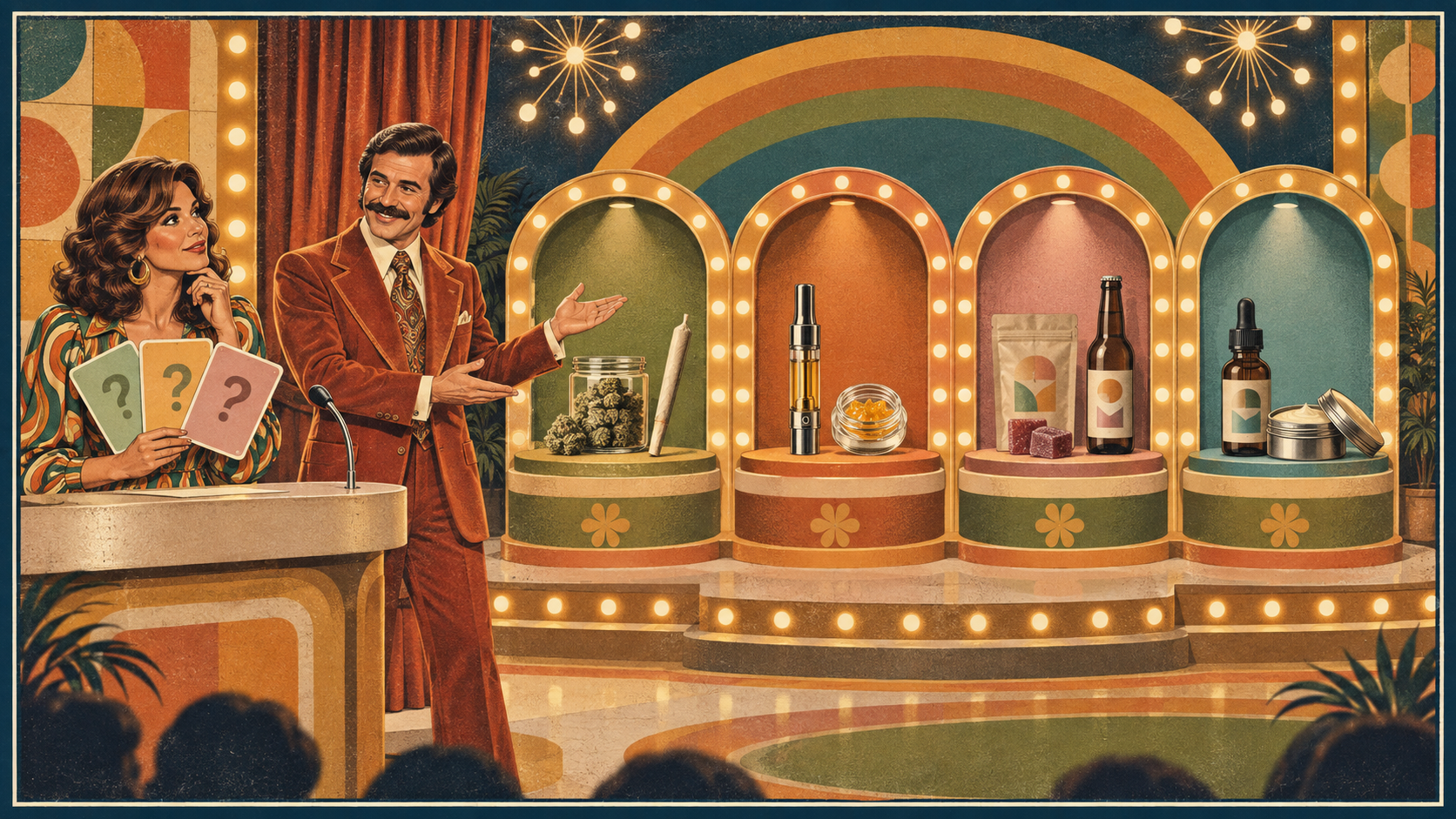
Cannabis menus often make choosing a product sound simpler than it is.
You may be asked whether you want something relaxing or energizing, discreet or social, fast or long-lasting. Those descriptions can provide a starting point. They cannot account for the person making the choice.
Cannabis affects individuals differently, and the same person may have different experiences at different times. Product formulation, cannabinoid concentration, serving size, method of use, previous experience, food intake, medications, alcohol, setting, and other factors may all play a role.
That is why a useful cannabis conversation should begin with questions—not a predetermined answer.
Start with the format, not the promised feeling
A product’s format can tell you how it is intended to be used, how cannabinoid content is displayed, whether equipment is required, how easily a serving can be identified, what ingredients may be included, how it should be stored, and which warnings deserve attention.
The format does not tell you exactly how you will feel. “Edible,” “vape,” “flower,” and “tincture” describe forms of cannabis. They are not personality types, experience guarantees, or personalized recommendations.
Which methods of use are you comfortable considering?
The first distinction is the route by which a product is used.
- Inhaled products: flower, pre-rolls, vapes, and concentrates used with an inhalation device
- Ingested products: edibles, beverages, capsules, and other swallowed products
- Measured liquids: tinctures and liquid products used according to labeled directions
- External products: topicals, balms, lotions, roll-ons, and some patches
Smoking exposes the lungs to smoke. Vaping avoids combustion but is not risk-free and has been associated with lung injury. Ingested products avoid smoke but can have delayed and longer-lasting effects, creating a different risk of overconsumption.
A better question
Instead of asking which method is universally safe, ask which risks and practical considerations you understand—and what still needs clarification.
How important is timing?
Different formats may be noticed on different timelines. Inhaled products are generally felt sooner than swallowed products. Edibles and beverages move through digestion, so their effects may be delayed and can last longer than expected.
Those patterns are not precise schedules. Timing may vary with formulation, cannabinoid concentration, serving size, food intake, previous experience, frequency of use, personal biology, medications, alcohol, and other substances.
A better question
Ask how the product is used and what its label says about delayed effects. Do not rely solely on a brand phrase such as “fast-acting.”
How clearly can the product be measured?
A regulated edible may list milligrams per piece. A tincture may provide measurements by milliliter or dropper marking. A beverage may state the amount per serving and the number of servings in the container.
Flower and pre-rolls are generally labeled by weight and cannabinoid percentage rather than standardized servings. The amount personally inhaled is not determined by package weight alone.
Ask before choosing
- Is the amount shown per serving or per package?
- How many servings are included?
- Is the product physically divided into servings?
- Does it include an appropriate measuring device?
- Can I follow the directions without guessing?
Clearly labeled does not mean personally appropriate. A state-permitted serving maximum is a regulatory limit, not an individualized recommendation.
What is the actual cannabinoid content?
Format and potency are separate decisions. A pre-roll may contain flower alone or be infused with concentrate. A vape may contain a highly concentrated extract. Two edible packages may contain different amounts per piece. A tincture may contain THC, CBD, several cannabinoids, or a particular ratio.
Read the total THC and CBD information, amount per serving, total package content, and number of servings. More THC is not automatically better. It is simply more THC.
“Format describes the method—not the person, the occasion, or a guaranteed experience.”
Are you comfortable with the ingredients and equipment?
Edibles and beverages can contain sweeteners, flavorings, allergens, preservatives, and emulsifiers. Tinctures commonly use carrier oils. Topicals may contain fragrances or botanical ingredients. Vapes contain cannabis oil or extract and may include additional labeled ingredients.
Ask before choosing
- Are there allergens or dietary considerations?
- Is the full ingredient list available?
- Does the product require refrigeration?
- Does it contain a carrier oil?
- Does a vape require a compatible battery?
- Do I understand charging and disposal directions?
A convenient-looking product may not be convenient if it requires unfamiliar equipment, careful measurement, refrigeration, or additional storage precautions.
Where will the product be stored?
Storage is part of choosing a format—not an afterthought. Products should remain in their original, clearly labeled packaging and be secured away from children and pets. Child-resistant packaging is not the same as child-proof packaging.
Edibles and beverages require particular care because they can resemble ordinary food or drinks. A beverage in a shared refrigerator or an edible in a kitchen cabinet may be mistaken for a non-cannabis product.
Ask before choosing
- Is there a secure place to store it?
- Does it require refrigeration?
- Can it remain in its original package?
- Could someone mistake it for ordinary food?
- Are children or pets present?
- Can the container be resealed correctly?
Where and when do you expect to use it?
Consider whether consumption is permitted, whether smoke, vapor, or odor may affect others, whether you will need to drive, whether you are responsible for children or other obligations, whether alcohol will be present, and whether you have enough uninterrupted time to account for delayed or lasting effects.
A discreet package does not make consumption appropriate everywhere. A familiar format does not make driving safe. A social setting does not remove the need to follow the label or respect personal limits.
Plan first
Arrange safe transportation before consuming cannabis. Do not drive or operate machinery while impaired.
How familiar are you with this specific format?
Experience with one format does not automatically transfer to another. Someone familiar with flower may still be unfamiliar with a concentrated vape or infused pre-roll. Someone who has used one edible formulation may respond differently to another product with a different serving size, cannabinoid ratio, or formulation.
Ask yourself
- Have I used this format before?
- Do I understand how it is measured?
- Is its concentration similar to products I understand?
- Does it contain added concentrate?
- Do I know how to operate the device?
- Can I follow the instructions without estimating?
A format-by-format question guide
No format earns a universal recommendation. Each creates a different set of practical questions.
Flower
- Am I comfortable with smoke and odor?
- Do I have the necessary accessories?
- Do I understand weight versus servings?
- Where would its use be permitted?
Pre-rolls
- Is it flower-only or infused?
- What is the weight of each pre-roll?
- What is the cannabinoid concentration?
- Am I assuming one pre-roll is a serving?
Vapes
- Cartridge or all-in-one?
- Does it require a compatible battery?
- Which ingredients are listed?
- Are charging and disposal directions clear?
Concentrates
- What is the cannabinoid concentration?
- How is it intended to be used?
- Which equipment is required?
- Is the extraction method provided?
Edibles
- How much active THC is in one serving?
- How many servings are included?
- What delayed-effect warning applies?
- Can it be stored away from ordinary food?
Beverages
- Is the bottle one serving or several?
- Does it need to be shaken?
- Does it require refrigeration?
- Could it be mistaken for another drink?
Tinctures
- What do the directions say?
- Is the measuring device clearly marked?
- Which cannabinoids and oils are included?
- Can I measure it without guessing?
Topicals
- Is it topical or transdermal?
- Where is it intended to be applied?
- Which ingredients and allergens are listed?
- Could the formulation be intoxicating?
Five format myths worth leaving behind
- One format is the safest.Different methods involve different risks. Avoiding smoke does not eliminate concerns about impairment, interactions, delayed effects, accidental ingestion, or overconsumption.
- Higher THC means higher quality.THC concentration is a measurement, not a quality score or a personal-fit guarantee.
- Sativa, indica, or hybrid tells you exactly how you will feel.These categories do not account for formulation, concentration, biology, setting, or individual variability.
- CBD means risk-free.CBD-containing products can still present risks and may interact with medications.
- A product that worked for someone else will work the same way for you.A friend’s experience is an anecdote, not a personalized recommendation.
How to have a more useful dispensary conversation
Instead of asking, “What’s the best thing you have?” begin with practical information.
- “I’m new to this format and want to understand how it is measured.”
- “Can you show me the amount per serving and the package total?”
- “Is this pre-roll infused or flower-only?”
- “Does this product require a separate device?”
- “Can you help me compare the ingredients?”
- “Which information comes from laboratory testing?”
- “What storage directions are on the package?”
- “Can you explain this label without predicting how I will feel?”
A responsible team member should help explain the format, label, ingredients, equipment, and directions. They should not diagnose a condition, recommend medical treatment, guarantee an experience, or tell you to disregard a healthcare professional.
A pause-before-purchase checklist
Confirm that you know
- What type of product it is
- How it is intended to be used
- Whether it contains THC
- The amount per serving
- The number of servings
- The total package content
- Whether equipment is required
- Which ingredients or allergens are present
- How it should be stored
- Which warnings apply
- Whether you have safe transportation
- Whether you are comfortable choosing it
If you cannot answer those questions, pause and ask for clarification. Choosing nothing is also a valid decision.
Better questions create better choices
There is no single cannabis format that works best for every person, occasion, or set of circumstances.
Begin with the method. Read the label. Consider the setting. Think about storage. Be honest about your experience. Ask what you still need to know.
You do not need one perfect answer. You need better questions.
Sources
- NJ-CRC Safe and Responsible Consumption
- NJ-CRC Recreational Cannabis in New Jersey
- NJ-CRC National Safety Month: Using Cannabis Safely
- CDC Cannabis Frequently Asked Questions
- CDC Cannabis and Poisoning
- FDA: What to Know About Cannabis and CBD Products
Information was checked against these sources during drafting. Regulations, research, and agency guidance may change. Review time-sensitive information and links before publication.
